 |
Am 21. November 2008 fand in Dusseldorf die Neueroffnung der gleichnamigen Galerie
„Le Connaisseur“ statt.
Wir sammeln nicht nur selbst Kollektionen, sondern stellen sie auch fur unsere Kunden aus. Es sind Ausstellungsstucke bedeutender kunstlerischer Arbeit sowohl fur die jeweilige Zeit als auch fur die gesamte Weltkulturgeschichte im Allgemeinen.
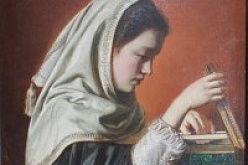
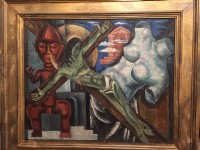
In unserer Galerie sind Gemalde und Grafiken alter Meister des 17. Jahrhunderts sowie zeitgenossischer Kunstler des 20. Jahrhunderts vertreten. Zudem werden in der Galerie Monographien aus den 60ern („Schestidesjatnik“) ausgestellt. Hierzu sind bereits Kataloge von Wladislav Subarev, Sergej Terjuschin und Walerij Nikitin erschienen.
Betonenswert ist auch, dass wir eine Filiale unserer Galerie in der Stadt Dusseldorf eroffnet haben, welche eine der bedeutendsten Handels- und Kulturzentren Europas ist.
In der Kollektion unserer neuen Galerie befinden sich bereits eine grosse Anzahl an Malern und Stilrichtungen – Nonkonformisten wie z.B. Ely Bielutin, Evgenij Ruchin, Oskar Rabin, Edouard Zelenine und Wladislav Zubarev, Vertreter der ersten Welle der russischen Avantgarde Serge Poliakoff, der zeitgenossische Skulpturhersteller Arman Fernandez und viele andere.
In der Ausstellung bieten wir Ihnen mit grosstem Vergnugen Kunstwerke der klassischen und zeitgenossischen Malerei, Kunstler des Silbernen Zeitalters, Kunstwerke aus der ersten Halfte des 20. Jahrhunderts wie z.B. die von Nikolai Krymov, Michail Larionov, Alexander Orloff, Alexander Benois und viele andere.
|
|
On 21st November 2008, there took place the opening of the gallery „Le Connaisseur“ in the German city Dusseldorf.
We do not only collect works of art of different genres, but we also expose them for our clients. The collection is characterized by exhibits of outstanding work of art both for the respective period and for the complete cultural history of the world in general.
In our gallery there can be found paintings and graphic arts of old masters of the 17th century as well as contemporary art of the 20th century. Moreover, the gallery exhibits monographs from the sixties (“shestidesjatnik”). On this, there have already been published catalogues of Vladislav Subarev, Sergej Terjuschin and Walerij Nikitin.
We opened up a branch of our gallery in the city of Duesseldorf, one of the most significant centers of culture and trade all over Europe.
The collection of our new gallery already contains a huge number of artists – nonconformists like Ely Belutin, Evgenij Ruchin, Oskar Rabin, Edouard Zelenine and Vladislav Zubarev, the representative of the first wave of the Russian Avantgarde Serge Poliakoff, the contemporary maker of sculptures Arman Fernandez and others.
In the exhibition we offer you with great pleasure classical and contemporary works of art as these of Russian artists of the Silver Age, further canvas from the first half of the 20th century as those ones of Nikolay Krymov, Michail Larionov, Alexander Orloff, Alexander Benois and others.
|

A
/ B / C / D / E / F / G / H / I / J / K / L / M / N / O / P / Q / R /
S / T / U / V / W / X / Y / Z
A
Arman (Fernandez, Armand Pierre)
1928-2005
Born in France, Armand Fernandez changed his named to Arman in 1958.
One of the most important international object artists and a co-founder and member of the Nouveau Realisme. He studied at the Ecole Nationale des Arts Decoratifs in Nice from 1946 to 1949 and then continued his studies for two years at the Ecole du Louvre in Paris. An acquaintance with Yves Klein led to the idea of organising joint happenings and events, which the two artists realised in 1953.
Armand's neo-dadaist 'Cachets' (stamp prints) of 1955, and later the 'Allures' (prints made with objects dipped into paint) and the 'Coupes' (cut-up objects) followed by the 'Coleres' (objects which were smashed and then mounted) were still influenced by Kurt Schwitters. When the last letter of his name was accidentally forgotten on a catalogue cover in 1958, he decided to keep this spelling.
1963 - he moved to New York and became an American citizen in 1972. Arman is recognized for his assemblage sculptures made from everyday junk materials.
Awards: Officier de la Legion d’Honneur, Grand Prix Marzotto, Commandeur des Arts et Lettres, Officier de l’Ordre National du Merite, Member of the Academia Brera.
He exhibited in :
Stedelijk Museum, Amsterdam, Holland
Museum Hans Lange, Krefeld, Germany
Kunsthalle, Berlin, Germany
Stadtische Kunsthalle, Dusseldorf, Germany
Ludwig Museum, Coblenz, Germany
Kuntsmuseum, Sammlung Sprengel, Hanover, Germany
Hessisches Landesmuseum, Darmstadt, Germany
Musee des Arts Decoratifs, Paris, France
Musee d'Art Moderne de la Ville de Paris, France
Modern Art Museum, Stockholm, Sweden
Seibu Museum of Art, Tokyo, Japan;
Walker Hill Art Center, Seoul, Korea
Modern Art Gallery, Taichung, Taiwan
National Museum of History, Taipei, China
Marlborough Monaco, Monaco
Museum of Contemporary Art of Teheran, Teheran, Iran and ets.
Public collections in the U.S.A., Europe, Japan, and many others, private collections of Russia, Europe and etc.
|
B
Baumgartner-Stoiloff, Adolf
1850-1924
The Bulgarian by origin. In 1880 studied in Petersburg Academy of Arts. Has become famous as the author of the products representing horses, scenes of hunting and races. Also wrote genre cloths, developing a theme of a military life of Cossacks. Pictures and drawings of the artist were reproduced in magazines 1890-1900. Works are stored in museums of Europe and private collections. His compositions with horses are in great demand in the antiquarian market. The considerable quantity of works is stored in George Bibikov's South African meeting, the representative of an ancient sort of noble family and the successor of Russian emigrants.
 |
"The Roman Chariot race in Circus Maximus", oil, canvas, 67 x 106 cm |

Benois Alexandre Nikolayevich
1870[1]-1960
was a prominent member of the St. Petersburg artistic intellectual Benois family, an influential art critic, artist, preservationist, and founding member of Mir iskusstva. His influence on the modern ballet and stage design is considered seminal.
Alexandre's father Nicholas Benois and brother Leon Benois were noted Russian architects. Alexandre didn't plan to devote his life to art and graduated from the Faculty of Law, St. Petersburg University in 1894. Three years later, while in Versailles, he painted a series of watercolors depicting Last Promenades of Louis XIV. When exhibited by Pavel Tretyakov in 1897, they brought him to attention of Sergei Diaghilev and Leon Bakst. Together they founded the art magazine and movement Mir iskusstva which aimed at promoting the Aesthetic Movement and Art Nouveau in Russia.
During the first decade of the new century, Benois continued to edit Mir iskusstva but also pursued his scholarly interests. He prepared and printed several monographs on the 19th-century Russian art and Tsarskoye Selo. From 1918 to 1926, he ran the gallery of Old Masters in the Hermitage Museum, to which he secured his brother's heirloom—Leonardo's Madonna Benois. In 1903, he printed his illustrations to Pushkin's Bronze Horseman which have since been recognized as one of the landmarks in the genre.
In 1901, Benois was appointed scenic director of the Mariinsky Theatre. Since then, he devoted most of his time to stage design and decor. Sets and costumes he designed for Ballets Russes productions of Les Sylphides (1909), Giselle (1910), and Petrushka (1911) are counted among his greatest triumphs. Although he worked primarily with Diaghilev for the Ballets Russes, he simultaneously collaborated with the Moscow Art Theatre and other notable theatres of Europe. His Memoirs were published in two volumes in 1955. The Russian artists Eugene Lanceray and Zinaida Serebriakova were his nephew and niece, and the British actor Sir Peter Ustinov was his grand nephew
 |
«Fountain «The Sheaf» Lower park of Peterhof», 1910, paper, watercolour, 32,5õ46,5 cm
|
 |
«The Saint-Peterburg’s landscape» , 1915, paper, watercolour, 32õ50,2 cm |

Beljutin Eliy Mikhailovich
(born in 1925)
E.M. Belyutin was born in the family of a writer related to Association “Pereval”. He is a participant of the Great Patriotic War, a holder of war decorations. He graduated from the Moscow State Art V.I. Surikov’s Institute, Professors – A.V. Lentulov, P.V. Kuznetsov and L.A. Bruni, in 1946. He joined the USSR Artists’ Union in 1947, but was excluded in 1948. He started organizing his own studio “New Reality”. He founded a creative studio at the All-Union Institute of Advanced Training of Printing Industry Executives in 1954. He was dismissed from the Institute in 1955 and from the Moscow Textile Institute – in 1957 due to the “lack of correspondence of his creative work and training methods to the main principles of the Socialistic realism art”. He was dismissed from the Printing Institute in 1959.
1964 – He started working in Abramtsevo (Abramtsevo Society).
1965 – His works were included into the composition of the National Museum of Modern Art in Paris (France).
1968 – Journey of 250 artists on a steamer chartered by the studio along the route “Moscow – Gorky - Moscow”.
1975 – destruction of the Moscow studio and the boards “New Moscow”, on which the artists had worked for several years.
E.M. Belyutin is an artist and theorist of art, professor, author of 17 monographic books on the Russian Fine Art Theory. He is a leader of the Russian “Unofficial Art”. He is a holder of numerous awards and diplomas, including the Gold Medal of the Rome Festival “Settore Internationale” (1970), Great Gold Medal of the Italian Academy of Modern Art “For Remarkable Achievements and Activity of International Importance” (1971), the prizes of Jenaccano (1970), Montekattini (1969), Association of American Artists “Woodstock” (1991), Commune of Venice (1991), Culture Association of Castel Majore (1995).
Exhibitions:
1948 – Young Painters’ Group Exhibition. USSR Architecture Academy (Moscow).
1961 – Personal exhibition. Kshivo kolo (Warsaw, Poland).
1961 – Gallery Artists. Lamber Gallery (Paris, France).
1962 – Taganskaya Exhibition (Exhibition of E.M. Belyutin’s Studio) (Moscow).
1962 – Anniversary exhibition “30 years of MAU”. Central Exhibition Hall “Manege” (Moscow).
1965 – 5 Young Painters of the Eastern Europe (Belyutin, Chernus, Jordan, Nazhinsky, Valenta). Biannual Exhibition. Lamber Gallery (Paris, France).
1966 - Gallery Artists. Lamber Gallery (Paris, France).
1967 – Artists of 7 countries at the Exhibition “Human Face”. Lamber Gallery (Paris, France).
1968 – City of Today. Lamber Gallery (Paris, France).
1969 – Personal exhibition within IV Paris Biannual Exhibition. Lamber Gallery (Paris, France).
1969 – Personal exhibition at the Centre of Arts “La Barcacca” (Rome, Italy).
1970 – XVI National Italian Exhibition of Fine Arts (Rome, Italy).
1970 – Exhibition of Four (within “Settore Internationale”). Gallery “La Barcacca” (Rome, Italy).
1970 – “200 Works of Modern Artists” (Catania, Italy).
1971 – XVII National Exhibition of Fine Arts. National Picture Gallery (Italy).
1971 – Modern Art. Alon Moresco (Salsomajore, Italy).
1971 – Exhibition at the Centre of Arts “La Barcacca” (Rome, Italy).
1990 – Personal exhibition at the Modern Art Gallery (Warsaw, Poland).
1990 – “New Reality. From Manege to Manege” (Manege, Moscow).
2006 – E. Balyutin’s School. Hall of E. Balyutin – V. Zubarev. Exhibition Hall “Infospace” (Moscow).
2006 – Temporal Art. E. Balyutin and his students. Gallery “Romanov” (Moscow)
|
1993, oil, canvas, 150x100 cm |
|
|
|
|
|
|
|
|
|
|
|
|
|
1986, oil, canvas, 200x125 cm |
|
1990, oil, canvas, 185x100 cm |
|
1991, oil, canvas, 150x100 cm |
|
1992, oil, canvas, 130x100 cm |
|
1992, oil, canvas, 200x125 cm |
|
1992, oil, canvas, 150x100 cm |
|
1993, oil, canvas, 150x100 cm |
|
1993, oil, canvas, 195x95 cm |

Belyaninov Boris
b.1927
 |
"Fruhling", oil, cardboard, 66 x 45 cm |
 |
"Totma", oil, cardboard, 66 x 45 cm |
 |
"Abend bei "Unglitsch" oil, cardboard, 50 x 70 cm |
 |
"Schoner Herbst", oil, cardboard, 50 x 70 cm |
 |
"Oka", oil, cardboard, 50 x 70 cm |
 |
"Zuhause an der Kuste", oil, cardboard, 64 x 44,5 cm |
|
C
Caurzou Jean
1907-2000
Born in 1907 Aleppo, Syria, died in August 12, 2000 Marsac-sur-l’Isle, Dordogne
Born Garnik Zouloumian, was a French-Armenian artist. Jean arrived in Paris in 1924 to study architecture. He started working as a theater decorator but he then quickly realized he preferred drawing and painting. In 1938, more than a hundred exhibitions of his works were organized in Paris, in the French provinces and abroad. In 1949, he received the coveted Hallmark prize.
A Carzou museum exists in the town of Dinard (Brittany). In 1952, he created costumes and sceneries for "Les Indes Galantes" of Rameau at the Opera de Paris . He continued with "Le Loup" (1953) for "Les Ballets" of Roland Petit, Giselle (1954) and Athalie (1955) at the Opera and "La Comedie francaise".
Member of the Institut de France.
He was the father of Jean-Marie Carzou.
In the Apocaplypse I have to represent the cycle of the human adventure” Jean
 |
"Les conqurants", 1980 mixed media on canvas , 200õ250 cm |

Chashnik I.
1902-1929
 |
«Supremus» 1920, mixed media, paper, 18õ12,5
cm |

Chichagovy Galina (1891-1966)
and Olga (1886-1958), sisters
 |
«Kost. ¹10» (postcard), 1920, mixed media, paper, 14,5õ9 cm |
|
D
Ducker Eugen Gustav
1841-1916
_43_x_64cm__l_auf_Leinwand_resize.jpg) |
oil, canvas, 43x64 cm |
|
E
Ekgorst Vasilij Efimovitsch
1831-1901
The Petersburg artist-landscapist, working in the academic traditions, the graduate of imperial Academy of Arts (the end 1850-h-1860).
He has known for the landscapes of a midland of Russia. He liked to represent the cosy corners of the nature casting poetic mood. Carefulness and attention to details is peculiar to creativity of Ekgorst.
_41_x_60cm__l_auf_Leinwand_resize.jpg) |
oil, canvas, 41x60 cm |

Ermolaeva V.
1893 – 1938
 |
«The sketch of celebratory registration» 1920. mixed media, paper, 30 õ 21
cm |
|
F  |
G
Glebova Natalya Vasilevna
Born in 1951. Active in Moscow
 |
«The genre scene», 1987, oil, canvas, 115õ115 cm |
|
H  |
I |
J  |
K
Klun (Klunkov) N.
1873 – 1943
 |
«Abstract composition»
1920, mixed media, paper, 25,2 õ 21
cm |

Krymov Nikolay Petrovich
was born May 3-rd 1884 in a family of an artist.
He studied with his father, and at the MUZhVS at the faculty of Architecture under A. Arkhipov, N. Kassatkin, L. Pasternak, and at studio of V. Serov and K. Korovin (1907-1911).
From 1906 Krymov participated in students exhibitions, and from 1907 in exhibitions including the Blue Rose, the Wreath (Stephanos), the Golden Fleece, SRKh (Union of Russian Artists).
Was a member of SRKh (1910-1923) and of OMKh (Society of Moscow Artists) (1923-1931).
Taught at the VKhUTEMAS (Moscow High Artist Technical Workshops) in 1920-1922, at the faculty of fine arts of Prechistenka Practical Institute (1922-1924), at IZO Technikum in Memory of 1905 (Art College) in 1934-1939, and later at the MPI (Moscow Institute of Polygraphy).
Krymov painted chiefly provincial towns and village landscapes. In his early creative work was noticeably influenced by primitive folklore, later his style changed to classical, based on relief. In the beginning he painted mainly by memory, depicting emotions, and not impressions. His landscapes are always based on light-shadow contrasts, and his coloring gravitates to the basic, clear colors. From 1920-s the artist began to work with nature (plenair), but still his painting remained mainly tones, unlike the impressionistic coloring. The motif become more like a study, less like a painting.
He has also worked for the theatre: in 1910 he designed a play "Hadn't a halfpenny, and suddenly three pennies" by A.N.Ostrovsky, for the Theatre of K.N.Nezlobin (the stage was never created). In 1926 he created a set decor for "A Hot Heart", another play by A.N. Ostrovsky, Moscow Art Theatre. The play still uses this decor.
Wrote and published theoretical articles about painting.
Exhibition abroad:
International Art Exhibition in Rome (1911), Exhibition of Russian Art in New York (1924).
One-man shows: the Tretyakov Gallery, Moscow (1922), the Academy of Arts, Moscow (1954).
In 1942 Krymov was awarded the rank of Honorary Art Worker of Russian Federation.
In 1949 he was elected as Associate Member of Academy of Arts USSR.
Was awarded the Order of the Red Banner of Labor 1954.
Was awarded the rank of People's Artist of Russian Federation 1956.
Krymov died May 6th 1958 in Moscow.
 |
«The fall», 1916, cardboard on canvas, oil, 42õ53 cm |

Kogan Nina
1888-1942
 |
«Abstraction»,
1920, mixed media, paper, 21,3õ15
cm |
 |
«Abstraction»,
1920, mixed media, paper, 21,3õ15
cm |
 |
«Abstraction»,
1920, mixed media, paper, 21,3õ15
cm |

Kuranskaya Olga Stepanovna
born in 1925
Higher education has received at the Moscow State Art Institute of V.I.Surikova. After the study termination worked under the direction of N.F.Denisovsky over the project of the Palace of Councils in Moscow, also participated in monumental registration of international pioneer camp Artek (1960). Further has successfully executed a number of responsible state orders, including on monumental registration of the House of scientists, the Central house of workers of arts, Houses of the journalists, in Moscow in 1960-1970th. Regularly took part in all-union, republican, youth exhibitions. Works of painting are stored in private collections in Russia and abroad.
 |
«The factory» , 1977, oil, canvas, 70õ125 cm |
|
L
Ladovsky N.
1902-1929
 |
«A pilot project of the municipal house»,
1920, mixed media, paper, 30õ22
cm |
 |
«A pilot project of the municipal house»,
1920, mixed media, paper, 27õ21,3
cm |

Larionov Mikhail
1881-1964
has studied at the MUZhVS (Moscow School of Painting, Sculpture and Architecture) in 1898-1908, under Levitan and Serov.
In1900 he has met Goncharova, his life-long companion and wife.
From 1906 he has participated in exhibitions including the Salon d'Automne, World of Art, SRKh (Union of Russian Artists).
In 1907 his 'primitive' period began, and he has founded Neo-Primitivism. Organized the Wreath - Stephanos exhibition with Burliuk in Moscow (1907), and participated in exhibitions including The Link in Kiev, The Golden Fleece (1908). His works were exhibited in Izdebsky's Salons in Odessa, Kiev, Riga and St Petersburg (1909-1910) and with Jack of Diamonds (1910). Organized group exhibitions Donkey's Tail (1912), Target (1913), and No.4 (1914).
Larionov has worked on the Soldiers series in 1910-1911.
Together with Goncharova they have founded Rayonism movement (1912).
In 1915 the artist has left Russia, and worked with Diagilev, living in Paris.
He has held exhibitions in Moscow, Leningrad and abroad
 |
"The Composition», 1920 years, mixed media, paper 28,5x20,7 cm |
 |
"The Composition», 1920-30, paper, mixed media, 27,5õ19 cm |
|
M
Muraviov Vladimir Leonidovitch
1861-1940
The painter, graphic. The childhood has spent in Voronezh.
Until 1924 lived in Prague. Studied in the Ukrainian studio of plastic arts. (To 1928) at S.A.Mako. Worked as the illustrator in "Prague-press" (1930-1938). Member of Czechoslovakia’s Soviet of Art. Until 1933 lived in France. The participant of exhibitions: the Parisian salons –“ Independent”, “Tjuilri”, the Union of the Soviet patriots «The honour of victory» (1946), Russian artists of the Parisian school (Paris, 1961), «Still Russian» (Paris, 1975).
Personal exhibitions: Paris (1933. 1969, 1973, 1975).
_35_x_51cm_Gouache_auf_Papier_resize.jpg) |
"Landscape", gouache, paper, 35õ51 cm |
|
N |
O
Orloff Alexandre
1899-1979
The painter, graphic. The childhood has spent in Voronezh.
Until 1924 lived in Prague. Studied in the Ukrainian studio of plastic arts. (To 1928) at S.A.Mako. Worked as the illustrator in "Prague-press" (1930-1938). Member of Czechoslovakia’s Soviet of Art. Until 1933 lived in France. The participant of exhibitions: the Parisian salons –“ Independent”, “Tjuilri”, the Union of the Soviet patriots «The honour of victory» (1946), Russian artists of the Parisian school (Paris, 1961), «Still Russian» (Paris, 1975).
Personal exhibitions: Paris (1933. 1969, 1973, 1975).
 |
«Abstraction», oil, canvas, 126x190 cm |
|
P Popova Irina Nikolaevna
b. 1923
Studied at 1905 Art colledge 1941-43, Suricov Institute until 1950. Active in Moscow. Began exhibiting 1953. Important shows include “Soviet Russia”, Moscow, 1960. Specialized in genre painting of children, portraits
 |
«The genre scene», 1969, canvas, oil, 95õ135 cm |

Poliakoff Serge
1900-1969
born in Moscow on 8 January 1900, is one of the most important members of the Ecole de Paris. He fled the Russian Revolution in 1917, first going to Constantinople and then to Paris in 1923, where he spent most years of his life. He began studying painting while earning a living as a musician. He enrolled at the Academie Forchot and Academie de la Grande Chaumiere in Paris 1929 and went to London in 1935 where he studied at the Slade School of Art. At first he produced variations of academic traditions and predominantly figurative motifs such as nudes, houses, trees etc. After 1935 Poliakoff increasingly turned towards abstract art, employing colour as colour without any figurative context. A decisive influence in this direction was Kandinsky, whom he met after his return to Paris. Sonia and Robert Delaunay taught him to appreciate the emotive quality of colour and awakened an interest in simultaneous contrasts. Another important source of Poliakoff's pictorial language was the sculptor Otto Freundlich with his curved colour-form compositions. Poliakoff developed a very individual form of abstract painting, arranging different coloured fields of colour next to one another. Shades of brown and grey were his preferred colours during the 1940s, while after the 1950s he extended his palette including bright contrasting tones. In his late work Poliakoff abandoned the polychrome palette and returned to earth tones and more monochrome works. Poliakoff's paintings were shown at international exhibitions during the 1950s and 1960s, after his nationalisation in France in 1962 the artist received his own room at the Biennale in Venice. Over the later years a number of lithographs, to which Poliakoff attended since 1962, as well as small format paintings were created, when the artist had to take care of himself after a heart attack in 1965. Serge Poliakoff died in Paris on 12 October 1969.
 |
«Abstraction», 1966, canvas, tempera, 73õ60 cm |
|
Q  |
R
Rabin Oscar
b. 1928
The Russian artist, one of founders of informal art group "LIANOZOVO".
Was born on January, 2nd, 1928 in Moscow. With 1946 for 1948 studied in the Riga’s Academy of arts, in 1948-1949 — at the Moscow state art institute of V.I.Surikov, whence soon has been excluded «for a formalism». In the end of 50-s together with Å and L.Kropivnitskimi became the founder of informal art group "Lianozovo". Rabin was the initiator and one of the main organizers of an exhibition of works of artists-nonconformists in the spring of 1974 on waste ground in Beljaevo, so-called «Buldozering exhibitions». Rabin has been deprived Soviet citizenship by the special decision of Presidium of the Supreme body of the USSR. In 1978 has emigrated to France. Livind in Paris.
 |
«Landscape with houses», oil, canvas, 60õ80 cm |

Rukhin Eugeniy Levovich
1943-1976
E.L. Rukhin was born in Saratov, July 02, 1943, in a family of office employees. He studied at the Leningrad State University, Geological Prospecting, in 1961-1966. E.L. Rukhin was an auditor at the Moscow Higher Art and Industrial College (former Stroganov’s College) in 1964-1965. He perished on May 24, 1976, on the fire of his studio in Leningrad
Exhibitions:
1966 – Exhibition at a Leningrad Cinema.
1967 – Personal exhibition at B. Parson’s Gallery (New York, USA).
1974 – Bulldozer exhibition in Belyaevo (Moscow).
 |
«The composition», 1969, canvas, oil, collage, 100õ100 |
|
S
Schweitzer, Adolf-Gustav
 |
«Sommerliche Waldlandschaft», oil, canvas, 100õ150 cm |

Stenberg V.
1899-1982
 |
«The composition», 1920, paper, mixed media, 16õ12,5 cm |

Suetin N.
1897 - 1954
 |
«Rhythmic sequence», 1920, mixed media, paper, 28,5õ22 cm |
|
T |
U
Unknown Artists
 |
"The walk along the river" (signed Matveev), end of XVIII century, oil, canvas, 48,4x60,3 cm |
|
V |
W |
X |
Y |
Z
Zelenine Edouard Leonidovich
1938-2002
was born in 1938 in Novokuznetsk. Has started to be engaged in painting at the age of 12 years in a fine art studio of the Novokuznetsk House of Pioneers.
In 1954-1957 studied in Sverdlovsk in art college. In 1957-1959 studied in Leningrad at art school at Academy of arts with Michael Shemjakinym and Oleg Grigoriev). Has been deducted from last class.
In 1959 after the American exhibition in Moscow, in the American magazine «Look Magasine» publishes an article about Zelenin «There's no place for individual»
In 1960th years lived in Novokuznetsk. Has replaced some jobs and continued working in painting. Going to Leningrad and Moscow very often, taking part in an art life of capitals. He exposed at room exhibitions, in cafe, at design and scientific institutes. With 1971 lived in village Ugor near to Vladimir. Studied Old Russian painting, architecture and a sculpture. In 1974 was the participant «Buldozering» exhibitions and in exhibitions in Izmajlovsky park. In 1975 trying to obtain the permit to expose the products, has been arrested for hooliganism. After clearing has received the exit visa. In 1975 it has left Soviet Union and has lodged with a family in Paris. The first years in the West it was much exposed – more than 40 personal and collective exhibitions with 1975 on 1984 (France, Germany, Sweden, Italy, the USA, Japan …) . After 1984 have practically ceased to be exposed, veins is closed, aspiring to keep independence of pressure of the market. In 1988 has visited the USSR under the invitation of Fund of Culture, in Novokuznetsk there has passed a personal exhibition, the stamp with a reproduction of one of its pictures has been let out. Has died in March of 2002, it is buried on the Parisian cemetery of Panten.

Zubarev Vladislav Konstantinovich
born in 1937
He was born in 1937 in Smolensk, his parents were biological teachers.
In 1960, he graduated from the Moscow Textile Institute, Faculty of Applied Art.
From 1960 to 1970, he studied and worked at E. Belyutin's studio «New Reality».
From 1978 to 1991, he held his studio «Temporal Reality», developing the principles of Eliy Belyutin's studio and idea of time in art.
Since 1992, he is a member of the International Artists Federation.
In 2000, he taught drawing and painting under his own programme at the Institute of Fashion Industry, Faculty of Design.
In 2003 and 2004, he runs summer studios for children in Maloe Vidnoe.
At the present time, the artist lives and works in Moscow.
Exhibitions:
1960 to 1970 - Exhibitions of studio «New Reality», (Abramtsevo Fraternity).
1969 - Personal exhibition (together with Lutsian Gribkov), «Beria House», 1, Vspolnyi Lane.
1989 - First International Exhibition in Moscow organised by Glàache International Gallery from Cologne. (Moscow).
1989 - Art, sculpture and graphic exhibition at the Central Artists House in Moscow together with 25 artists of studio «Temporal Reality». (Moscow).
1990 – «E. Belyutin's studio «New Reality» at the Manege. (Moscow).
1991 - Exhibition of the International Artists Federation. 28, Malaya Gruzinskaya at the Manege. (Moscow).
1992 - Exhibition at the Bishop's Eparchial Museum. (Trier, Germany).
1992 - Personal exhibition at «16, Ostozhenka» Exhibition Hall. House of Historians Solovievs. (Moscow).
1993 – «Training Course» exhibition and classes with students at «28, Malaya Gruzinskaya» Exhibition Hall. (Moscow).
1994 - Personal exhibition together with group «Explosion» at «28, Malaya Gruzinskaya» Exhibition Hall. (Moscow).
2005 - Exhibition of V. Zubarev's studio «Temporal Reality», presentation of V. Zubarev's book «Temporal Art» at the National Contemporary Art Centre. (Moscow).
2005 - Classical abstract art biannual organised by M. P. Kroshitskiy Art Museum in Sevastopol and Abstract Art Academy. (Moscow, Sevastopol, Saint Petersburg, Crimea).
2006 - Personal exhibition «Temporal Art Image» at DOM Cultural Centre (Moscow).
2006 – E. Belyutin's studio. (Hall of E. Belyutin and V. Zubarev). «Infospace» Exhibition Hall. (Moscow).
2006 –Regular exhibition. «Vladislav Zubarev's. Sculpture, painting and graphic». «Synergy Gallery». (Moscow).
2006 –First suprematic exhibition «Dignity». Contemporary Art Centre. (Moscow).
2006 – «Temporal Art» exhibition E. Belyutin and his students. V. Zubarev's Hall. Romanov Gallery (Moscow).
2006-2007 – «Nonconformists of 60-80 (Second wave of Russian avantguarde)». Exhibition in Moscow Mortgaging Bank. (Moscow).
 |
"Danaya", 1971, oil, canvas, 126x98 cm |
 |
"Scream", 1975, oil, canvas, 110x69 cm |
|
|
 |